
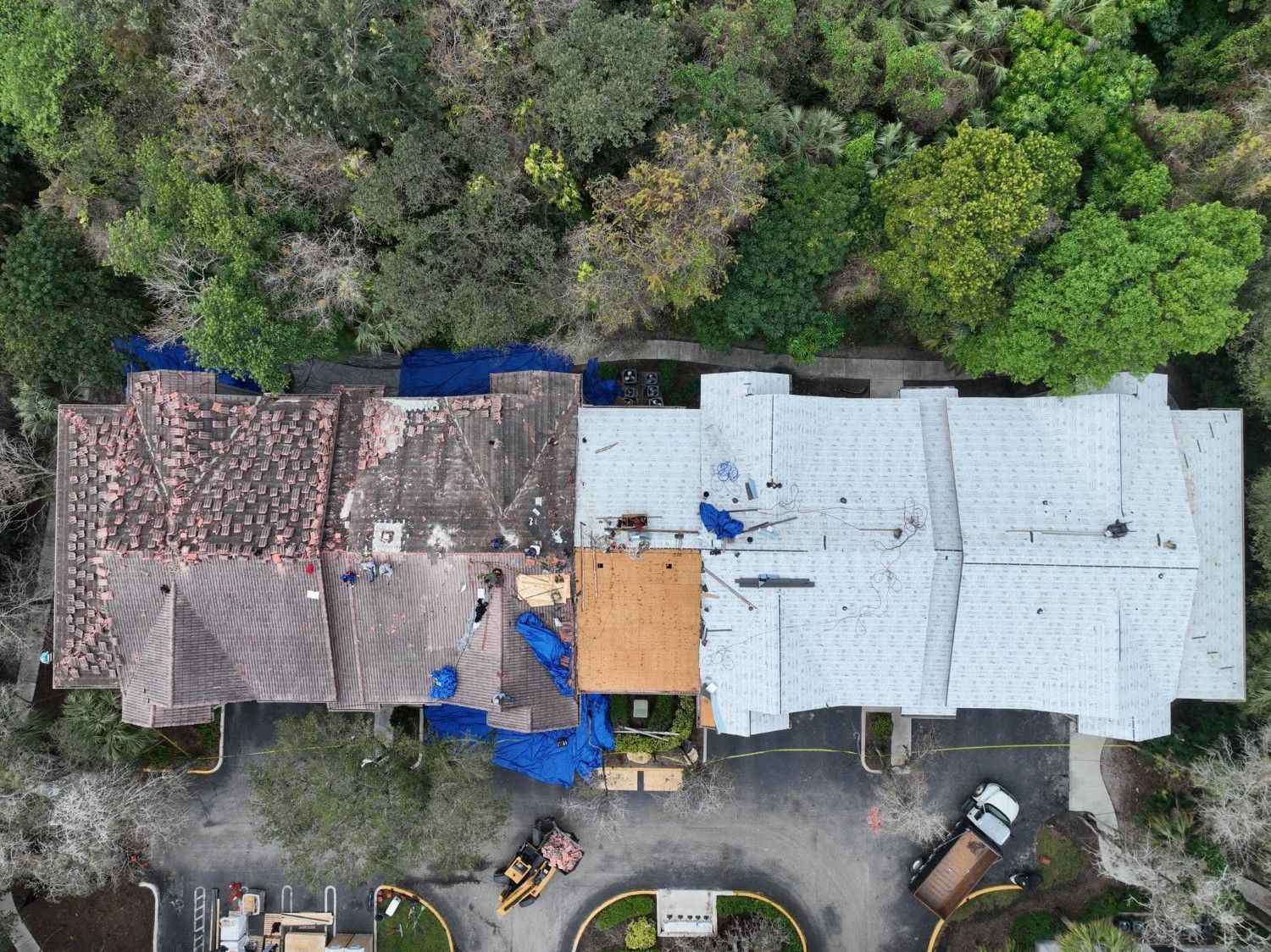
Identifying Problems Storms Leave Behind
Storm Damage Roofing in Loxahatchee for properties affected by wind, water intrusion, and displaced materials after severe weather
South Florida storms create roofing damage that often remains invisible from ground level, making professional evaluation critical after major weather events pass through Loxahatchee. Wind lifts shingles, displaces tiles, tears flashing loose from penetrations, and drives water under materials that normally provide reliable protection during typical rainfall. Eagle I Construction Corporation provides storm-related roof inspections, repairs, reroofing, and replacement services for homeowners, commercial properties, HOA communities, and buildings managed by property management companies throughout the region.
Storm damage assessment examines wind effects on fasteners and material attachments, checks for water intrusion pathways created during the event, and identifies missing or damaged components that may not be obvious without accessing the roof surface. Decades of local experience provide insight into which storm patterns create specific types of damage and where that damage typically concentrates on different roof designs.
Schedule a post-storm roof inspection to document current conditions and identify damage before it allows continued water intrusion into your building.
What Changes After Storm Damage Gets Addressed
Storm damage evaluations determine whether impacts require isolated repairs, more extensive reroofing of damaged sections, or full replacement when the event has compromised system integrity beyond practical repair. The inspection documents displaced materials, examines whether underlayment remains intact where surface components lifted, and assesses structural damage from fallen debris or concentrated wind forces. This documentation becomes essential for insurance claims and helps property owners understand the actual extent of storm effects versus pre-existing wear.
Once storm damage repairs complete, your roof returns to providing consistent weather protection rather than allowing water penetration through compromised areas. The next rain event doesn't produce new interior ceiling stains, and you no longer see exposed underlayment or missing materials when viewing the roof from yard level. Wind no longer catches loose edges that flutter during breezes, signaling vulnerable attachment points that will worsen during the next storm cycle.
Prompt evaluation following major weather events prevents secondary damage that occurs when storm impacts go unaddressed. Water enters through displaced materials with each subsequent rain, gradually expanding the damage footprint beyond what the initial storm created. Property owners who delay assessments often find that what started as repairable damage has deteriorated into conditions requiring more extensive reconstruction of decking, framing, or interior finishes.
What Property Owners Usually Ask
Building owners dealing with potential storm damage need practical information about assessment timing, documentation, and repair approaches before making decisions.
What storm damage might not be visible from the ground?
Missing fasteners, lifted shingles that settled back into place, cracked tiles that haven't fully separated, and torn underlayment hidden beneath surface materials all compromise roof performance without creating obvious visual indicators. Wind also damages flashing seals and fastener connections that fail gradually rather than immediately, producing leaks weeks or months after the storm passed.
How soon after a storm should property owners arrange inspections?
Immediate assessment documents conditions while the connection between storm events and damage remains clear, which matters considerably for insurance documentation and claims processing. Waiting allows additional weather exposure through compromised areas and makes it harder to distinguish storm impacts from general deterioration.
What documentation helps with insurance claims for storm damage?
Detailed photo documentation of displaced materials, damaged components, and areas where water has penetrated combines with written assessment reports that describe the scope and cause of damage. This documentation establishes that conditions resulted from the covered storm event rather than pre-existing wear or deferred maintenance.
Can partial repairs address storm damage or does the whole roof need replacement?
Repair viability depends on damage extent, the age and condition of undamaged areas, and whether the roof system can remain watertight with isolated corrections. Some insurance policies require matching materials that may no longer be available, potentially expanding repair scope beyond the directly damaged area.
What makes Loxahatchee properties particularly vulnerable during hurricane season?
Regional exposure to tropical systems brings sustained high winds combined with heavy rainfall that tests every vulnerable point in roofing systems. The combination of wind uplift and water intrusion creates failure patterns different from what occurs in calmer climates where roofs primarily contend with gradual weathering rather than periodic severe stress events.
Eagle I Construction Corporation brings decades of experience evaluating storm impacts across various roofing systems and property types, helping owners understand post-storm conditions and make informed repair decisions. Arrange a comprehensive storm damage assessment to document current roof conditions and discuss appropriate response options based on what the inspection reveals.