
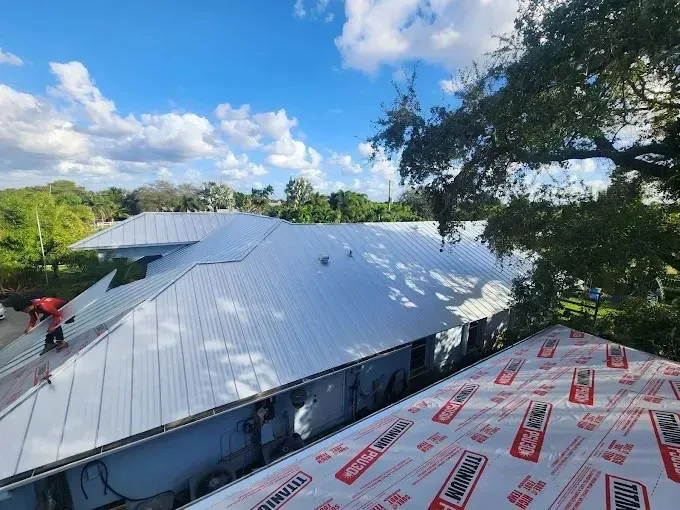
Surfaces Designed for Year-Round Exposure
Metal Roofing in Loxahatchee for structures requiring maximum durability under extreme conditions
South Florida heat, heavy rain, and severe weather conditions demand roofing materials that maintain integrity across decades of thermal cycling and moisture exposure. Metal roofing provides the durability and long-term value that commercial and residential properties require when replacement frequency and maintenance costs factor into total ownership expenses. Available in multiple styles and profiles, metal systems suit both roof replacement projects and new construction applications where building design accommodates standing seam, corrugated, or architectural panel configurations.
Eagle I Construction Corporation addresses the installation and flashing details critical to metal roofing performance, particularly at panel seams, penetration points, and transitions where thermal expansion creates movement that inferior attachment methods cannot accommodate. Proper installation prevents the leaks and fastener failures that occur when inexperienced crews treat metal roofing like conventional shingle systems.
Learn about the lifespan and efficiency benefits metal roofing systems deliver compared to traditional materials.
Why Panel Attachment Methods Matter
Metal roofing installation requires understanding thermal movement coefficients, which dictate whether panels get fixed at every rib or use clip systems that allow expansion and contraction without fastener stress. Standing seam systems employ concealed clips that eliminate exposed fasteners subject to UV degradation and loosening, while exposed fastener panels require neoprene washers and specific torque values to seal without crushing the metal substrate.
You notice completed metal roofing sheds water immediately without surface retention, reflects solar heat to reduce cooling loads, and handles walking traffic for maintenance access without permanent deformation. Panel alignment appears straight across the entire roof plane, seams interlock consistently, and trim details at eaves, rakes, and ridges fit precisely without gaps that invite water or pest intrusion.
The installation includes substrate preparation that addresses any decking irregularities, underlayment selection based on panel profile and roof pitch, and flashing fabrication for chimneys, vents, and skylights using compatible metals that prevent galvanic corrosion. These steps determine whether your metal roof performs for 40-plus years or requires repairs within the first decade.
Answers to Frequent Service Questions
Property owners evaluating metal roofing typically want information about noise, cost comparison, and style compatibility before proceeding with installation.
What causes noise concerns with metal roofing installations?
Rain impact noise becomes noticeable only when inadequate insulation or lack of solid decking allows sound transmission into occupied spaces. Proper underlayment and attic insulation dampen sound to levels comparable with other roofing materials.
How does metal roofing perform during lightning storms common in Loxahatchee?
Metal roofing does not attract lightning but safely dissipates electrical energy across the entire roof surface if a strike occurs, reducing fire risk compared to combustible roofing materials. The non-combustible nature provides added protection during wildfire conditions or when windblown embers land on the roof.
When does metal roofing cost less over the building's lifetime?
Initial material and installation costs exceed shingle or tile, but service life extending beyond 50 years with minimal maintenance means total cost per year often falls below materials requiring replacement every 15 to 25 years. Energy savings from reflective coatings further improve long-term value.
What metal roofing styles complement different property types?
Architectural standing seam panels suit contemporary and commercial buildings, corrugated profiles work for industrial and agricultural structures, and stone-coated steel tiles replicate traditional tile appearance while offering metal's durability advantages for residential applications.
How do flashing details prevent leaks at roof penetrations?
Flashing must account for metal's thermal movement while maintaining water-tight seals, typically accomplished through multi-piece assemblies with sealant and mechanical fastening that secure the base while allowing panel movement. Pipe boots, vent caps, and cricket installations receive custom fabrication to match panel profiles.
Eagle I Construction Corporation applies construction knowledge accumulated across decades to every metal roofing project, addressing the technical requirements that determine system performance. Contact our office to review metal roofing options suited to your property's specific conditions and performance objectives.